 By Martin Sarah
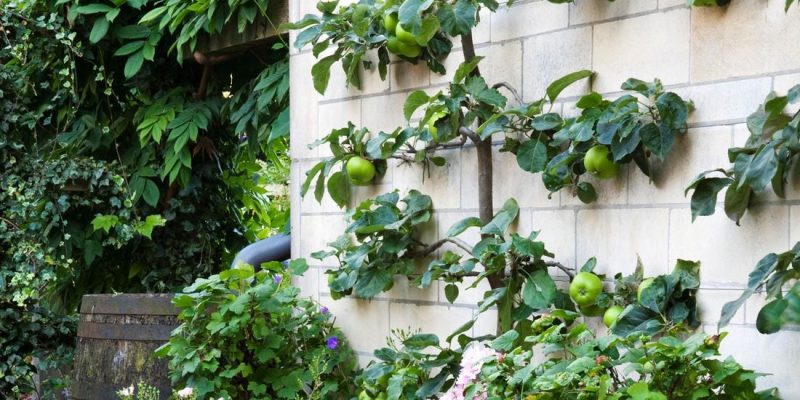
Espalier walls – this ancient technique, refined over centuries, transforms fruit trees into living art while maximising space and productivity. Beyond their aesthetic appeal, espalier walls provide unexpected advantages that make them a compelling choice for British gardeners, whether tending a small urban plot or a sprawling rural estate. A nursery specialist from Chris Bowers, a leading UK supplier, explains: “Espalier training is ideal for maximising fruit production in limited spaces, particularly for apples and pears. It’s a method that combines functionality with beauty, allowing gardeners to create productive, ornamental features. For those seeking quality stock, a wide range of espalier fruit trees are available to suit various garden sizes and preferences.” This article explores three surprising benefits of espalier walls: enhanced microclimate control, improved pest and disease management, and increased accessibility for all gardeners.
Enhanced Microclimate Control for Optimal Growth
Espalier walls leverage the thermal properties of walls or fences to create a microclimate that benefits fruit trees. In Britain’s often unpredictable climate, where frost and cool summers can challenge fruit production, this is a significant advantage. A south- or west-facing wall absorbs sunlight during the day, radiating warmth at night. This stored heat extends the growing season, enabling fruit to ripen more reliably, even in cooler regions. For instance, apples and pears, which thrive in such conditions, produce higher yields when trained against a warm wall. The technique also protects trees from frost damage, as the wall’s residual heat mitigates sudden temperature drops.
This microclimate effect is particularly valuable for gardeners in northern or exposed areas of the UK, where growing conditions can be marginal. By positioning fruit trees for sale against a wall, gardeners can cultivate varieties that might otherwise struggle, such as dessert apples or late-ripening pears. The warmth also accelerates flowering, ensuring better pollination opportunities. Unlike free-standing trees, which are fully exposed to wind and cold, espaliered trees benefit from the wall’s shelter, reducing stress and promoting vigorous growth. This controlled environment can even allow stone fruits like peaches or nectarines, typically less suited to espalier, to thrive when fan-trained on a south-facing wall.
The microclimate created by espalier walls also supports biodiversity. The sheltered conditions attract pollinators like bees, which are active earlier in the season due to the warmth. This enhances fruit set, ensuring a bountiful harvest. Gardeners can further optimise this benefit by selecting self-fertile varieties or planting compatible pollination partners nearby, as advised by nursery experts. The ability to manipulate growing conditions in this way makes espalier walls a powerful tool for British gardeners aiming to maximise their fruit tree output.
Improved Pest and Disease Management
Espalier walls contribute significantly to pest and disease control, an often-overlooked benefit. The open, flattened structure of espaliered trees allows for better air circulation compared to traditional bush or standard forms. This increased airflow reduces humidity around the foliage, which is a primary factor in fungal diseases like apple scab or powdery mildew, common issues in the UK’s damp climate. By keeping leaves and fruit drier, espaliered trees are less susceptible to these infections, reducing the need for chemical interventions.
The open structure also makes it easier to spot and address pest problems early. For example, aphids or codling moths, which can devastate apple crops, are more visible on the exposed branches of an espaliered tree. Gardeners can quickly identify infestations and apply targeted treatments, such as insecticidal soap or manual removal, before pests spread. This visibility also aids in monitoring for signs of disease, allowing for timely pruning of affected areas. Regular summer pruning, as recommended for espaliered trees, further promotes health by removing crowded growth that could harbour pathogens.
Another advantage is the ease of implementing physical pest barriers. Netting or fleece can be draped over an espalier wall with minimal effort, protecting fruit from birds or wasps without the complexity of covering a large, rounded tree. This is particularly useful for cherries or plums, which are prone to bird damage. The wall itself can act as a partial barrier, deterring ground-based pests like rabbits, especially if the tree is planted slightly away from the base. By combining these factors, espalier walls create a naturally resilient growing system, reducing reliance on pesticides and fostering healthier trees.
This benefit aligns with the growing trend towards sustainable gardening in the UK. Gardeners seeking fruit trees for sale can choose disease-resistant varieties, such as ‘Redsleeves’ apples, which perform well in espalier form and further minimise maintenance. The combination of structural advantages and careful cultivar selection makes espalier walls an effective strategy for organic or low-intervention gardening.
Increased Accessibility for All Gardeners
Espalier walls make fruit growing accessible to a wider range of gardeners, regardless of physical ability or garden size. The technique’s compact, two-dimensional form is ideal for small spaces, such as urban courtyards or narrow allotments, where traditional trees would be impractical. By training trees flat against a wall or fence, gardeners can cultivate apples, pears, or even stone fruits in spaces as small as a few feet wide. This democratises fruit growing, enabling those with limited space to enjoy home-grown produce.
The accessibility extends to maintenance and harvesting. Espaliered trees are typically kept at a height of 1.8 to 2 metres, with branches trained horizontally or in patterns like fans or candelabras. This low height eliminates the need for ladders, making pruning and picking fruit safer and more manageable, particularly for older gardeners or those with mobility issues. The structured form also simplifies pruning tasks, as the branches are clearly defined and easy to reach. Unlike bush trees, which can become tangled and unwieldy, espaliered trees maintain an orderly shape, reducing the physical effort required to keep them healthy.
For families, espalier walls offer an educational opportunity. Children can participate in gardening tasks like tying branches or harvesting fruit, as the trees are at a manageable height. This hands-on engagement fosters an appreciation for gardening and sustainable food production. Additionally, the aesthetic appeal of espalier walls—often described as living sculptures—adds a decorative element to gardens, making them attractive to novice gardeners who might be intimidated by more complex fruit tree forms.
The versatility of espalier walls further enhances their accessibility. They can be grown against walls, fences, or freestanding wire frames, adapting to various garden layouts. For renters or those with temporary spaces, container-grown espalier trees offer a portable solution. Gardeners can source suitable fruit trees for sale from specialist nurseries, ensuring they start with high-quality stock tailored for espalier training. This flexibility and ease of use make espalier walls an inclusive option for diverse gardeners across the UK.
Practical Considerations for Establishing Espalier Walls
Creating an espalier wall requires careful planning to maximise its benefits. The first step is selecting an appropriate location. A south- or west-facing wall is ideal for most fruit trees, as it provides the warmth and sunlight needed for optimal growth. East-facing walls can also work, particularly for hardier varieties like cooking apples or Morello cherries, while north-facing walls are best reserved for shade-tolerant options. The wall or fence must be structurally sound, as it will support wires or trellises to guide the tree’s growth.
Choosing the right tree is equally important. Apples and pears are the most suitable for espalier training due to their flexible branches and spur-bearing habits. Spur-bearing cultivars, such as ‘Cox’s Orange Pippin’ or ‘Conference’ pears, produce fruit on short side shoots, making them easier to maintain in a flattened form. Dwarf or semi-dwarf rootstocks, like M27 for apples or Quince C for pears, are recommended to control vigour and keep trees manageable. Gardeners should consult specialist nurseries to find fruit trees for sale that are pre-selected for espalier training, often labelled as “feathered maidens” with well-positioned shoots.
Planting should occur in autumn or early spring for bare-root trees, which are cost-effective and widely available. The tree should be positioned 15-25 cm from the wall to allow air circulation and prevent root damage to foundations. A support system, such as galvanised wires spaced 60 cm apart, is essential for training branches. After planting, the initial pruning sets the foundation for the espalier shape, typically cutting the main stem to encourage lateral growth. Annual summer pruning maintains the form, while winter pruning removes congested spurs to promote fruiting.
Soil preparation is critical for success. Fruit trees require fertile, well-draining soil, enriched with organic matter like compost. A slow-release fertiliser, such as osmocote granules applied in spring, provides steady nutrients throughout the season. Regular watering is necessary during the first year, particularly in dry spells, to establish the root system. Once established, espaliered trees are relatively low-maintenance, requiring only periodic checks for pests and diseases.
Aesthetic and Functional Versatility
Espalier walls are not limited to practical benefits; they also offer remarkable versatility in garden design. The clean lines of a well-trained espalier create a focal point, transforming plain walls or fences into dynamic features. Patterns like horizontal cordons, Belgian fences, or palmettes add architectural interest, blending seamlessly with both modern and traditional garden styles. In spring, the trees burst into blossom, followed by colourful fruit in summer and autumn, providing year-round visual appeal.
Functionally, espalier walls can serve multiple purposes. They act as living fences, offering privacy without the bulk of traditional hedging. In small gardens, they can divide spaces, such as separating a vegetable patch from a seating area, while still allowing light to pass through. Freestanding espaliers, supported by wire frames, can line pathways or create tunnels, adding a whimsical touch to larger gardens. This adaptability makes espalier walls suitable for a range of settings, from urban balconies to country estates.
The technique also supports a variety of fruit types beyond apples and pears. While stone fruits like plums or cherries are less common in espalier form, they can be fan-trained against walls for similar benefits. Gardeners interested in experimenting can explore fruit trees for sale that include these options, ensuring they select varieties suited to their climate and space. The combination of aesthetic charm and practical utility makes espalier walls a standout choice for creative gardeners.
Challenges and Solutions
While espalier walls offer numerous benefits, they come with challenges that require attention. Training and pruning demand patience and skill, particularly in the first few years. Incorrect pruning can disrupt the tree’s balance, leading to uneven growth or reduced fruiting. To mitigate this, gardeners should follow a structured pruning schedule, focusing on summer cuts to shape the tree and winter cuts to thin spurs. Resources from specialist nurseries, such as pruning guides, can provide clarity for beginners.
Another challenge is ensuring adequate pollination. Many fruit trees require a compatible partner to set fruit, which can be difficult in small spaces. Self-fertile varieties, like ‘Red Falstaff’ apples or ‘Conference’ pears, are ideal for single-tree gardens. Alternatively, grafting multiple varieties onto one rootstock can solve pollination issues, though this requires more advanced pruning to balance growth. Consulting a nursery for advice on pollination groups is recommended when selecting trees.
Finally, the initial cost and time investment can deter some gardeners. Pre-trained espalier trees are more expensive than standard forms, but they save years of training effort. For those on a budget, starting with a maiden tree and training it over time is a cost-effective option. Patience is key, as a fully formed espalier may take three to five years to establish, but the long-term rewards outweigh the effort.
Conclusion
Espalier walls offer a unique blend of practicality and beauty, making them an excellent choice for British gardeners. The enhanced microclimate control extends the growing season and boosts yields, while the open structure simplifies pest and disease management. Their accessibility ensures that gardeners of all abilities and space constraints can enjoy home-grown fruit. By selecting quality fruit trees for sale and following proper training techniques, anyone can create a productive and ornamental espalier wall. This ancient practice, refined for modern gardens, proves that with careful planning, even the smallest spaces can yield abundant harvests and stunning visual impact.